
Safety data sheet
Standardized safety protocols and material specifications for professional use.
Certificate of Analysis
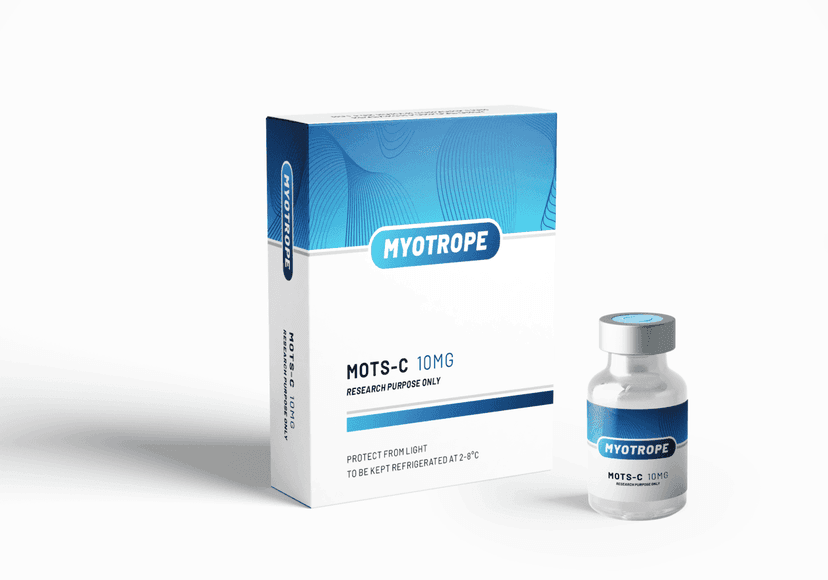
Purity verified via High-Performance Liquid Chromatography (HPLC) for #myo-mots-c-10mg
MOTS-C (10mg)
Research Grade >99% Purity
Authorized Resellers
Available through our trusted partners
123peptide.com
Netherlands · Europe
local_shipping2-3 Business Days
Depeptidenwinkel.com
Netherlands · Europe
local_shipping2-3 Business Days
Scientific Background
MOTS-C (Mitochondrial Open Reading Frame of the 12S rRNA-c) is a 16-amino acid mitochondria-derived peptide encoded within the mitochondrial genome. Discovered in 2015 by researchers at USC, it was the first peptide identified as a mitochondrial hormone (mitokine) capable of entering the nucleus and modulating gene expression in response to metabolic stress.
MOTS-C acts as a systemic metabolic regulator. Under physiological conditions, it promotes glucose utilization over fatty acid oxidation through AMPK activation and AICAR-like metabolic effects. Under metabolic stress (exercise, caloric restriction, high fat diet challenge), it translocates to the nucleus and activates stress-response pathways including AMPK, folate-methionine cycle regulation, and antioxidant programs. This makes it a key signaling peptide connecting mitochondrial function to whole-body metabolic adaptation.
Preclinical research has demonstrated MOTS-C's remarkable roles in exercise mimicry (increasing endurance and metabolic capacity in rodents), insulin resistance prevention, anti-aging effects (MOTS-C levels decline with age), and longevity-associated metabolic pathways. Human studies are in early stages; MOTS-C concentrations correlate inversely with obesity, type 2 diabetes, and aging. As an investigational peptide, it is provided strictly for research purposes.
Intended Research Use
- Mitochondria-derived peptide (mitokine) biology and mitochondrial genome expression research
- AMPK activation and metabolic stress response pathway studies
- Insulin sensitivity and glucose homeostasis research in insulin resistance models
- Exercise mimicry and endurance enhancement mechanisms in rodent studies
- Anti-aging and longevity-associated metabolic pathway research
- Folate-methionine cycle and one-carbon metabolism modulation
- Obesity and type 2 diabetes metabolic adaptation research
- Mitochondrial-nuclear communication (retrograde signaling) studies
menu_bookScientific Publications
Cell Metab (2015)
The mitochondrial-derived peptide MOTS-c promotes metabolic homeostasis and reduces obesity and insulin resistance
open_in_newhttps://pubmed.ncbi.nlm.nih.gov/25738458/
Nat Commun (2019)
MOTS-c is an exercise-induced mitochondrial encoded regulator of age-dependent physical decline and muscle homeostasis
open_in_newhttps://pubmed.ncbi.nlm.nih.gov/31387998/
Cell Chem Biol (2020)
MOTS-c peptide regulates nuclear gene expression in response to mitochondrial stress to promote metabolic homeostasis
open_in_newhttps://pubmed.ncbi.nlm.nih.gov/31735669/
Aging Cell (2021)
Circulating MOTS-c levels are reduced in male patients with type 2 diabetes
open_in_newhttps://pubmed.ncbi.nlm.nih.gov/33432769/
Proc Natl Acad Sci (2016)
Mitochondrial peptides modulate aging phenotypes and are associated with metabolic syndrome risk
open_in_newhttps://pubmed.ncbi.nlm.nih.gov/26932914/
J Gerontol A Biol Sci (2022)
MOTS-c and exercise: mitochondrial peptide as a metabolic regulator
open_in_newhttps://pubmed.ncbi.nlm.nih.gov/35092690/
Research Note: MOTS-C is a groundbreaking discovery in mitochondrial biology — the first evidence that the mitochondrial genome directly encodes bioactive hormones that regulate systemic metabolism. Its ability to act as an "exercise mimetic" by activating AMPK and improving metabolic flexibility independent of physical activity makes it a uniquely valuable research tool. Plasma MOTS-C levels decline with age and obesity, correlating with metabolic deterioration — positioning it as both a biomarker and potential intervention target in aging and metabolic disease research.
FOR RESEARCH USE ONLY. This product is intended for laboratory research purposes only and is not for human consumption, medical, or diagnostic use.
Possible stacks with other peptides
Synergistic combinations for enhanced research outcomes
MOTS-C targets AMPK-mediated metabolic homeostasis and mitochondrial signaling. Research combinations typically focus on synergistic metabolic enhancement, anti-aging pathways, and exercise performance support.

AICAR (50mg vial)
arrow_forwardmyo-aicar-50mg
Synergistic AMPK activation — AICAR directly activates AMPK while MOTS-C modulates the upstream mitochondrial signaling pathway.

NAD+ (500mg vial)
arrow_forwardmyo-nad-plus-500mg
Mitochondrial energy currency support — NAD+ and MOTS-C target complementary aspects of mitochondrial function and metabolic health.

SS-31 (Elamipretide) (10mg vial)
arrow_forwardmyo-ss-31-elamipretide-10mg
Mitochondrial membrane protectant complement to MOTS-C's metabolic signaling for comprehensive mitochondrial health research.

Epithalon (10mg vial)
arrow_forwardmyo-epithalon-10mg
Telomere lengthening and epigenetic anti-aging compound for comprehensive longevity pathway research alongside MOTS-C.

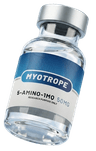
5-Amino-1MQ 50mg (50mg vial)
arrow_forwardmyo-5-amino-1mq-50mg
NNMT inhibitor to boost NAD+ availability and metabolic efficiency — investigated alongside MOTS-c for synergistic mitochondrial support and energy balance.
Cycling Note: MOTS-C research cycles typically run 4–8 weeks with 3–5 injections per week. The combination with regular exercise training is a key feature of research protocols studying metabolic adaptation and exercise mimicry effects.