
Safety data sheet
Standardized safety protocols and material specifications for professional use.
Certificate of Analysis
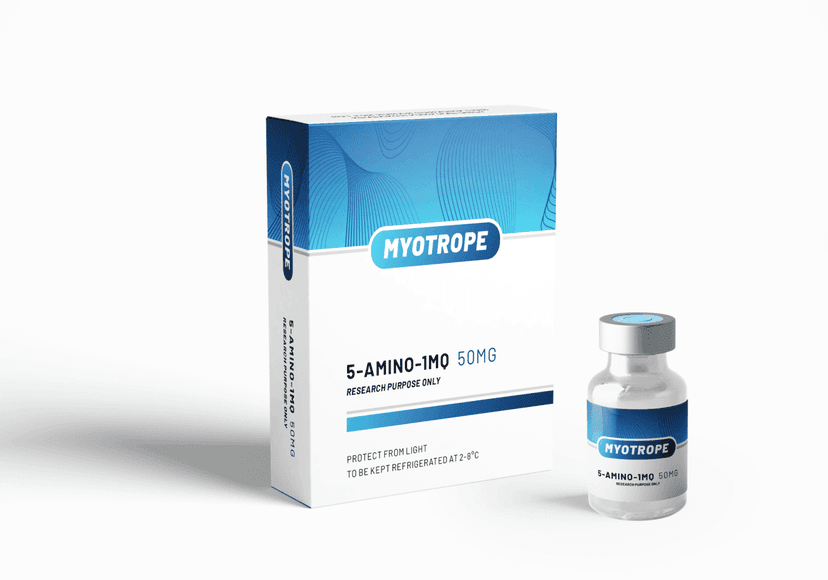
Purity verified via High-Performance Liquid Chromatography (HPLC) for #myo-5-amino-1mq-50mg
5-Amino-1MQ (50mg)
Research Grade >99.2% Purity
Authorized Resellers
Available through our trusted partners
123peptide.com
Netherlands · Europe
local_shipping2-3 Business Days
Depeptidenwinkel.com
Netherlands · Europe
local_shipping2-3 Business Days
Scientific Background
What is 5-Amino-1MQ Peptide?
5-Amino-1MQ is a cell-permeable, selective small-molecule inhibitor of nicotinamide N-methyltransferase (NNMT), an enzyme implicated in metabolic regulation. By blocking NNMT, it helps preserve nicotinamide for NAD+ synthesis, potentially activating SIRT1 pathways linked to energy balance and fat oxidation.
As an investigational compound, 5-Amino-1MQ is not approved for therapeutic use and is supplied strictly for research purposes into metabolic efficiency, fat metabolism, and cellular energy homeostasis.
5-Amino-1MQ Peptide Description and Research Overview
This quinolinium-based molecule targets NNMT, which methylates nicotinamide using SAM as a donor. In metabolic dysfunction states, NNMT overexpression in fat tissue depletes nicotinamide and lowers NAD+ availability. Inhibition may redirect nicotinamide toward NAD+ production, supporting mitochondrial function and SIRT1 activity.
Preclinical models show protection against diet-induced weight gain, improved body composition, and enhanced metabolic parameters without reducing food intake. Some studies also indicate synergy with exercise, including better grip strength in aged subjects.
Research protocols often use subcutaneous delivery once or twice daily. For lab use, reconstitute the 50 mg vial with 4.0 mL bacteriostatic water for ~12.5 mg/mL (1 unit ≈ 125 mcg on U-100 syringes). Typical ranges are 2.5–5 mg daily, with tolerance assessment at lower doses.
Freeze dry vials at −20 °C; refrigerate mixed solutions at 2–8 °C and use within 2–4 weeks.
5-Amino-1MQ in Research
Investigations into NNMT inhibition reveal protection against diet-induced obesity and metabolic disturbances, with reduced fat accumulation and preserved muscle in animal models. Combined with calorie restriction, it normalizes microbiome profiles in obese subjects.
In aging research, NNMT blockade synergizes with physical activity to improve strength and cellular health. Pharmacokinetic studies confirm good oral bioavailability and plasma half-life, supporting once- or twice-daily dosing.
Intended Research Use
- Inhibits NNMT to spare nicotinamide and boost NAD+ availability
- Activates SIRT1 pathways linked to mitochondrial biogenesis and fat oxidation
- Supports metabolic balance and lean mass preservation in obesity models
- Enhances exercise adaptation and muscle function in aging studies
- Generally well-tolerated with no major toxicity in preclinical data
menu_bookScientific Publications
Nature Medicine (2014)
Nicotinamide N-methyltransferase knockdown protects against diet-induced obesity
open_in_newhttps://www.nature.com/articles/nm.3640
PMC (2024)
Nicotinamide N-methyltransferase inhibition mitigates obesity-related metabolic dysfunctions
open_in_newhttps://www.ncbi.nlm.nih.gov/pmc/articles/PMC11642503/
Frontiers in Pharmacology (2024)
NNMT: a novel therapeutic target for metabolic syndrome
open_in_newhttps://www.frontiersin.org/journals/pharmacology/articles/10.3389/fphar.2024.1356789/full
PubMed (2021)
LC-MS/MS assay for 5-amino-1-methylquinolinium: pharmacokinetic and oral bioavailability study
open_in_newhttps://pubmed.ncbi.nlm.nih.gov/34304009/
ResearchGate (2021)
Combined NNMT inhibition and reduced-calorie diet normalizes body composition in obese mice
open_in_newhttps://www.researchgate.net/publication/354123456
PMC (2022)
Reduced calorie diet combined with NNMT inhibition establishes a distinct microbiome in DIO mice
open_in_newhttps://www.ncbi.nlm.nih.gov/pmc/articles/PMC8741234/
Scientific Reports (2024)
NNMT inhibition mimics exercise benefits in aged mice muscle function
open_in_newhttps://www.nature.com/articles/s41598-024-66034-5
FOR RESEARCH USE ONLY. This product is intended for laboratory research purposes only and is not for human consumption, medical, or diagnostic use.
Possible stacks with other peptides
Synergistic combinations for enhanced research outcomes
Preclinical explorations suggest that combining 5-Amino-1MQ with complementary compounds can enhance its metabolic and NAD+-boosting effects, potentially amplifying fat oxidation, energy production, and cellular repair pathways. These stacks are often investigated in models of obesity, aging, and exercise adaptation, where synergistic inhibition of NNMT alongside other mechanisms may lead to more pronounced outcomes in body composition and mitochondrial function. Always align stacks with specific research goals, monitoring for interactions in controlled settings.
Semaglutide (5mg vial)
arrow_forwardmyo-semaglutide-5mg
Explored in combination for enhanced weight management and fat loss synergy, leveraging GLP-1 agonism alongside NNMT inhibition to improve insulin sensitivity and energy balance.
Tirzepatide (10mg vial)
arrow_forwardmyo-tirzepatide-10mg
Explored in combination for enhanced weight management and fat loss synergy, leveraging dual GLP-1/GIP agonism alongside NNMT inhibition to improve insulin sensitivity and energy balance.

AICAR (50mg vial)
arrow_forwardmyo-aicar-50mg
Investigated for complementary AMPK activation and mitochondrial biogenesis, potentially boosting exercise performance and grip strength in aged subjects through dual metabolic pathway targeting.
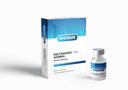
AOD-9604 (HGH Fragment) (5mg vial)
arrow_forwardmyo-hgh-fragment-aod-9604-5mg
Studied for additive lipolytic effects, focusing on fat metabolism and lean mass preservation without impacting food intake, ideal for body composition research.
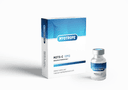
MOTS-c (10mg vial)
arrow_forwardmyo-mots-c-10mg
Examined for synergistic mitochondrial support and energy regulation, enhancing cellular adaptation in stress or aging scenarios.
Cycling Note: Cycling these stacks in 4–8 week periods with off-times may help sustain efficacy, as prolonged NNMT inhibition could lead to adaptive responses in metabolic models.