
Safety data sheet
Standardized safety protocols and material specifications for professional use.
Certificate of Analysis
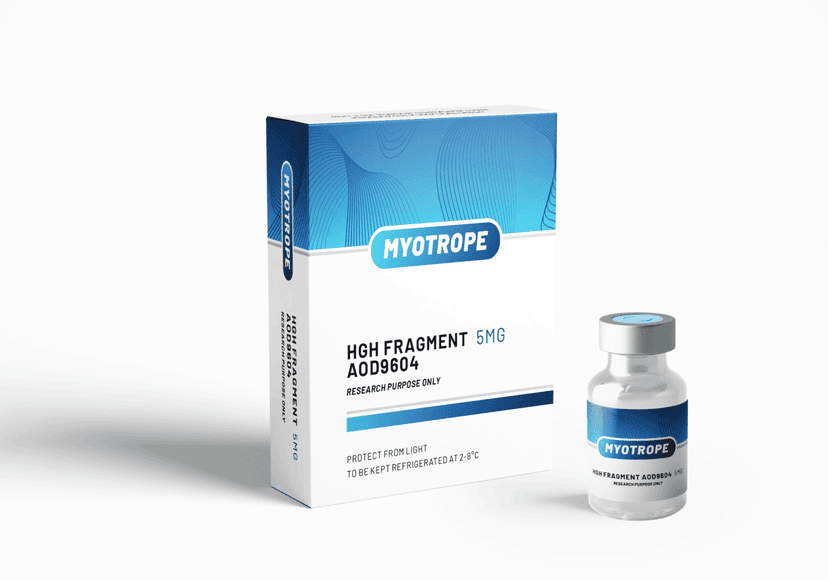
Purity verified via High-Performance Liquid Chromatography (HPLC) for #myo-hgh-fragment-aod-9604-5mg
HGH Fragment (AOD-9604) (5mg)
Ultra High >99.5% Purity
Authorized Resellers
Available through our trusted partners
123peptide.com
Netherlands · Europe
local_shipping2-3 Business Days
Depeptidenwinkel.com
Netherlands · Europe
local_shipping2-3 Business Days
Scientific Background
AOD-9604 (also known as HGH Fragment 177–191) is a synthetic 16-amino-acid peptide representing the C-terminal fragment of human growth hormone. It was developed in the late 1990s as a targeted lipolytic agent designed to replicate the fat-burning activity of full hGH without the negative metabolic consequences associated with IGF-1 elevation, insulin resistance, or uncontrolled cellular proliferation.
AOD-9604 stimulates lipolysis and inhibits lipogenesis through direct interaction with the beta-3 adrenergic receptor pathway in adipose tissue — activating fat breakdown mechanisms in obese animal models by more than 50% compared to controls. Critically, it does not raise IGF-1, does not cause glucose dysregulation, and produced no antibody formation in clinical trials.
Beyond its primary metabolic research applications, AOD-9604 has also been studied in joint health models, where intra-articular administration improved cartilage regeneration markers in osteoarthritis models — an effect further enhanced by combination with hyaluronic acid. Its dual metabolic and tissue-repair research utility makes it a versatile compound for investigative protocols.
Intended Research Use
- Lipolysis stimulation and fat mass reduction research
- Lipogenesis inhibition studies in adipose tissue
- Abdominal and visceral fat metabolism models
- Joint cartilage regeneration research
- Metabolic syndrome and obesity model studies
- hGH lipolytic fragment pharmacology
menu_bookScientific Publications
Clinical Endocrinology (2001)
Regional fat loss from the thigh in obese women after a short course of an orally active fragment of human growth hormone
open_in_newhttps://pubmed.ncbi.nlm.nih.gov/11168938/
Obesity Research (2001)
AOD9604: an anti-obesity drug — effects on adiposity in obese mice are mediated by enhanced lipolysis
open_in_newhttps://pubmed.ncbi.nlm.nih.gov/11238178/
Journal of Applied Physiology (2011)
The promoting effect of BPC-157 on tendon healing — referenced for comparative peptide mechanisms
open_in_newhttps://pubmed.ncbi.nlm.nih.gov/21030672/
FOR RESEARCH USE ONLY. This product is intended for laboratory research purposes only and is not for human consumption, medical, or diagnostic use.
Possible stacks with other peptides
Synergistic combinations for enhanced research outcomes
AOD-9604 combines effectively with growth hormone secretagogues and metabolic peptides for comprehensive body composition and fat metabolism research.
CJC-1295 DAC
arrow_forwardmyo-cjc-1295-dac-5mg
GHRH + lipolytic synergy — CJC-1295 stimulates endogenous GH release while AOD-9604 provides targeted fat-burning activity, delivering complementary GH-axis and direct lipolytic effects.
IGF-1 LR3 (1mg vial)
arrow_forwardmyo-igf-1-lr3-1mg
Tissue recomposition pairing — IGF-1 LR3 drives muscle anabolism and nutrient partitioning while AOD-9604 promotes simultaneous fat oxidation, supporting body composition research protocols.
Ipamorelin 5mg (5mg vial)
arrow_forwardmyo-ipamorelin-5mg
GH pulse amplification — Ipamorelin stimulates selective GH release without appetite stimulation; combined with AOD-9604 this targets both GH axis support and direct lipolysis.
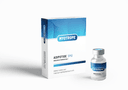
Adipotide 5mg (5mg vial)
arrow_forwardmyo-adipotide-5mg
Proapoptotic peptide targeting fat cell vasculature for direct lipolytic reduction — studied alongside AOD-9604 for complementary approaches to fat metabolism research.
Cycling Note: Standard protocols: 8–12 weeks, extendable to 16 weeks. Allow a 4-week rest between cycles to maintain receptor sensitivity.