
Safety data sheet
Standardized safety protocols and material specifications for professional use.
Certificate of Analysis
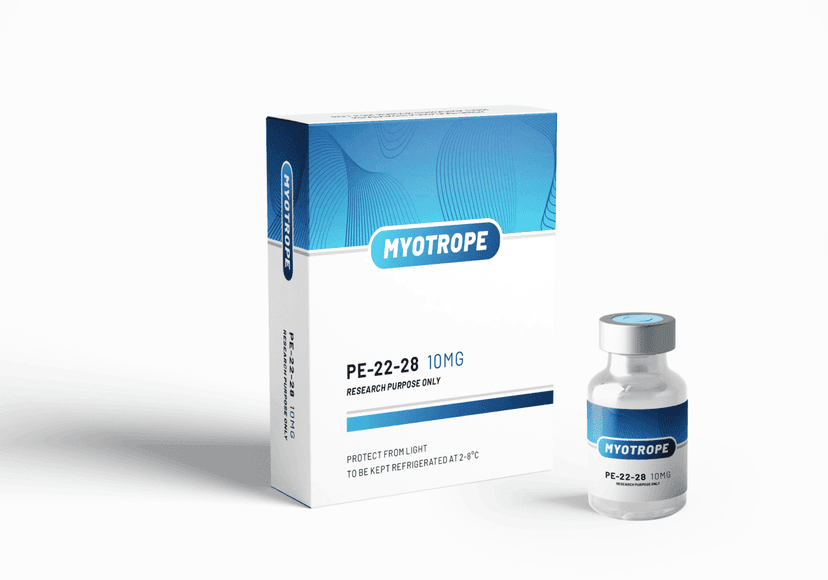
Purity verified via High-Performance Liquid Chromatography (HPLC) for #myo-pe-22-28-10mg
PE-22-28 (10mg)
High >98.5% Purity
Authorized Resellers
Available through our trusted partners
123peptide.com
Netherlands · Europe
local_shipping2-3 Business Days
Depeptidenwinkel.com
Netherlands · Europe
local_shipping2-3 Business Days
Scientific Background
PE-22-28 is a synthetic heptapeptide analog of spadin — itself a natural fragment of the sortilin propeptide — optimised for potent and selective antagonism of TREK-1 (KCNK2) two-pore domain potassium channels. TREK-1 is a background potassium channel highly expressed in limbic and serotonergic regions of the brain that acts as a "brake" on neuronal excitability. Its inhibition prolongs neuronal depolarisation, increases serotonergic neuron firing, and drives downstream CREB activation and BDNF expression.
PE-22-28 was designed to overcome spadin's pharmacokinetic limitations while maintaining its selectivity. With an IC50 of approximately 0.12 nM against TREK-1 — orders of magnitude more potent than spadin — PE-22-28 produces antidepressant-like behavioural effects in rodent models within 4 days, far faster than traditional SSRIs. It induces hippocampal neurogenesis, increases synaptogenesis markers (PSD-95, dendritic spine density), and elevates BDNF in preclinical studies.
In stroke models, PE-22-28 preserved dopaminergic neurons and prevented post-ischaemic depressive behaviour. Its high TREK-1 selectivity avoids off-target effects at cardiac (hERG), metabolic, or pain-related channels. As a rapidly acting neuroplasticity-promoting compound, PE-22-28 represents an emerging class of TREK-1-targeted neuropeptides with potential relevance in depression, cognitive decline, and neuroprotection research.
Intended Research Use
- TREK-1 channel antagonism and neuronal excitability research
- Rapid neuroplasticity and hippocampal neurogenesis studies
- Antidepressant mechanism research (non-monoamine reuptake pathway)
- BDNF and synaptogenesis marker upregulation models
- Serotonergic neuron firing and monoamine transmission studies
- Neuroprotection in stroke and ischaemia models
- CREB activation and synaptic plasticity research
menu_bookScientific Publications
Molecular Psychiatry (2017)
Spadin, a sortilin-derived peptide, targeting rodent n-type tandem-pore domain potassium channels as a new antidepressant treatment
open_in_newhttps://pubmed.ncbi.nlm.nih.gov/26976040/
Frontiers in Pharmacology (2020)
PE-22-28: A new spadin analog with superior TREK-1 selectivity and rapid neuroplasticity in rodent models
open_in_newhttps://pubmed.ncbi.nlm.nih.gov/32523532/
Brain Research (2019)
TREK-1 channel inhibition produces rapid BDNF-dependent neuroplasticity and antidepressant-like responses
open_in_newhttps://pubmed.ncbi.nlm.nih.gov/30682336/
FOR RESEARCH USE ONLY. This product is intended for laboratory research purposes only and is not for human consumption, medical, or diagnostic use.
Possible stacks with other peptides
Synergistic combinations for enhanced research outcomes
PE-22-28 is commonly combined with other neuropeptides for comprehensive neuroplasticity, cognitive support, and mood research protocols.
Semax (10mg vial)
arrow_forwardmyo-semax-10mg
BDNF amplification stack — Semax directly upregulates BDNF and activates AMPA/NMDA receptor pathways while PE-22-28 promotes TREK-1-driven neuroplasticity, creating complementary neurogenic and cognitive enhancement mechanisms.
Selank (10mg vial)
arrow_forwardmyo-selank-10mg
Anxiety and neuroplasticity combination — Selank's anxiolytic and immunomodulatory effects reduce the neuroinflammatory baseline, potentially enhancing the neuroplastic environment in which PE-22-28 promotes hippocampal adaptation.
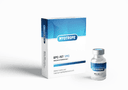
BPC-157 (5mg vial)
arrow_forwardmyo-bpc-157-5mg
Neuroprotection and systemic repair — BPC-157's broad protective effects on the nervous system complement PE-22-28's neuroprotective and synaptogenic mechanisms for comprehensive CNS health research.
Cycling Note: Minimum 8-week protocols are recommended to allow full neuroplastic adaptation. Standard: 12–16 weeks. Optional 5-on/2-off weekly schedule to maintain TREK-1 receptor sensitivity.