
Safety data sheet
Standardized safety protocols and material specifications for professional use.
Certificate of Analysis
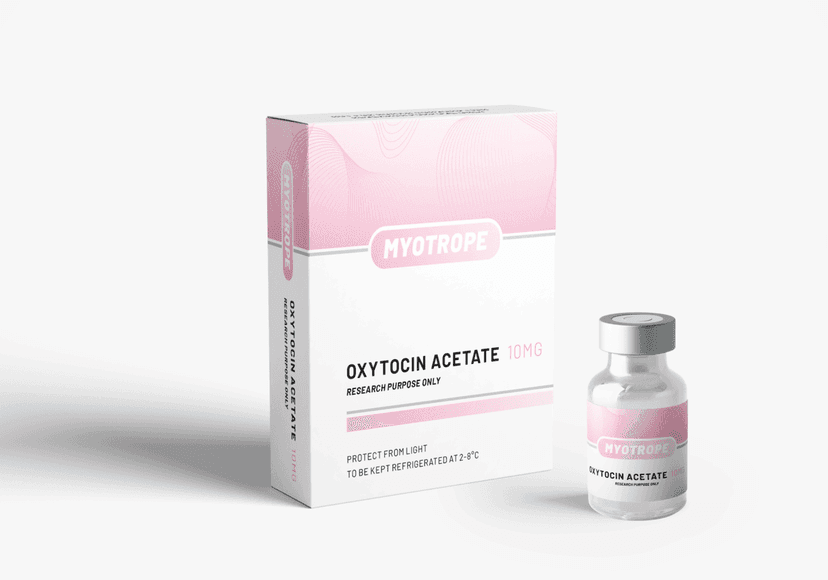
Purity verified via High-Performance Liquid Chromatography (HPLC) for #myo-oxytocin-acetate-10mg
Oxytocin Acetate (10mg)
Ultra High >99.5% Purity
Authorized Resellers
Available through our trusted partners
123peptide.com
Netherlands · Europe
local_shipping2-3 Business Days
Depeptidenwinkel.com
Netherlands · Europe
local_shipping2-3 Business Days
Scientific Background
Oxytocin is a cyclic nonapeptide synthesised in the hypothalamic paraventricular and supraoptic nuclei, stored in the posterior pituitary, and released into systemic circulation and central nervous system projections. It acts on Gq-protein-coupled oxytocin receptors (OXTR), triggering phospholipase C activation and intracellular calcium release in target tissues throughout the body and brain.
As a neuromodulator, oxytocin influences a broad range of prosocial and physiological functions: it enhances social bonding, trust, and empathy; reduces fear and anxiety responses via amygdala modulation; and modulates pain perception, inflammation, and smooth muscle contractility (uterus, mammary glands). OXTR is also expressed in metabolic tissues, linking oxytocin to appetite regulation and energy balance.
Research protocols explore oxytocin's role in social anxiety, autism spectrum models, post-traumatic stress, and metabolic regulation. Its short plasma half-life (~1–3 minutes IV, longer SC) necessitates regular administration in pharmacokinetic research. Subcutaneous daily dosing provides more sustained plasma levels than intranasal routes, making it a common choice for longitudinal research protocols.
Intended Research Use
- Prosocial behaviour, trust, and social bonding research
- Anxiety and fear response modulation (amygdala pathway)
- Stress response and HPA axis modulation studies
- Metabolic regulation and appetite control research
- Pain perception and anti-inflammatory pathway studies
- Reproductive physiology (smooth muscle contraction, lactation models)
- Autism spectrum and social anxiety disorder research models
menu_bookScientific Publications
Neuron (2008)
Oxytocin as an anti-stress hormone modulates social cognition and behaviour
open_in_newhttps://pubmed.ncbi.nlm.nih.gov/18817731/
Journal of Neuroscience (2012)
Central oxytocin signaling decreases food intake, improves social interaction and amygdala function
open_in_newhttps://pubmed.ncbi.nlm.nih.gov/22442068/
Science (2005)
Oxytocin increases trust in humans
open_in_newhttps://pubmed.ncbi.nlm.nih.gov/15931222/
FOR RESEARCH USE ONLY. This product is intended for laboratory research purposes only and is not for human consumption, medical, or diagnostic use.
Possible stacks with other peptides
Synergistic combinations for enhanced research outcomes
Oxytocin is often combined with neuropeptides and mood-modulating compounds for comprehensive prosocial, stress-reduction, and wellness research protocols.
Semax (10mg vial)
arrow_forwardmyo-semax-10mg
Neuromodulation pairing — Semax enhances BDNF and cognitive clarity while oxytocin supports prosocial behaviour and stress reduction, creating a broad neuromodulatory research combination.
Selank (10mg vial)
arrow_forwardmyo-selank-10mg
Anxiety and social resilience stack — Selank's anxiolytic and immunomodulatory effects complement oxytocin's stress-reducing and prosocial properties for comprehensive emotional regulation research.
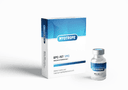
BPC-157 (5mg vial)
arrow_forwardmyo-bpc-157-5mg
Stress recovery adjunct — BPC-157's systemic healing and anti-inflammatory properties complement oxytocin's stress modulation for comprehensive recovery and wellbeing protocols.
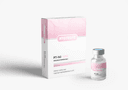
PT-141 (Bremelanotide) (10mg vial)
arrow_forwardmyo-pt-141-bremelanotide-10mg
Sexual health and bonding combination — PT-141's central arousal activation via MC3R/MC4R pairs with oxytocin's bonding and trust enhancement for comprehensive intimacy and sexual wellness research.
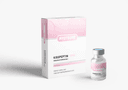
Kisspeptin 10mg (10mg vial)
arrow_forwardmyo-kisspeptin-10-10mg
Reproductive hormone regulator with stress-reduction overlap — paired with Oxytocin Acetate in studies on bonding, fertility, and neuroendocrine balance.
Cycling Note: Protocols typically run 8–12 weeks. Allow 4-week rest intervals. Monitor social and stress biomarkers where possible to assess protocol response.