
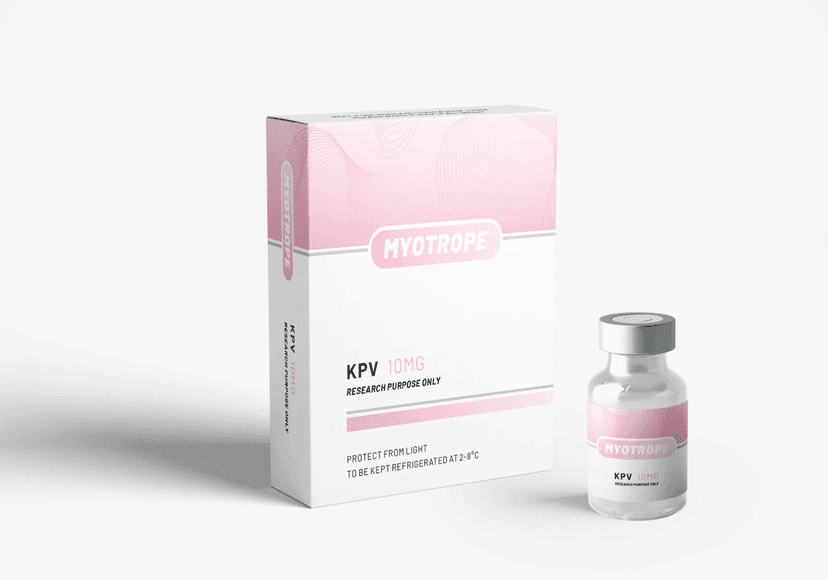
Safety data sheet
Standardized safety protocols and material specifications for professional use.
Certificate of Analysis
Purity verified via High-Performance Liquid Chromatography (HPLC) for #myo-kpv-10mg
KPV (10mg)
Ultra High >99.5% Purity
Authorized Resellers
Available through our trusted partners
123peptide.com
Netherlands · Europe
local_shipping2-3 Business Days
Depeptidenwinkel.com
Netherlands · Europe
local_shipping2-3 Business Days
Scientific Background
KPV (Lysine-Proline-Valine) is a tripeptide derived from the C-terminal end of alpha-melanocyte-stimulating hormone (α-MSH). As the active anti-inflammatory core of α-MSH, KPV retains potent immunomodulatory and anti-inflammatory properties without the melanotropic effects of the full peptide.
KPV exerts its effects primarily by inhibiting pro-inflammatory cytokines such as IL-1β, TNF-α, and IL-6, while promoting the activity of regulatory T cells. It also directly interacts with the NF-κB signaling pathway, suppressing inflammatory gene transcription at the cellular level.
Research has shown KPV to be particularly effective in models of intestinal inflammation, wound healing, and skin barrier repair. Its small size allows it to penetrate mucosal and dermal barriers efficiently, making it a versatile candidate for topical and systemic research applications.
Intended Research Use
- Intestinal inflammation modulation (IBD/Crohn's/colitis models)
- Skin wound healing and barrier repair research
- Cytokine suppression (IL-1β, TNF-α, IL-6)
- NF-κB pathway inhibition studies
- Mucosal immune regulation
- Anti-inflammatory peptide pharmacology
menu_bookScientific Publications
Journal of Endocrinology (2006)
Anti-inflammatory effects of the melanocortin peptide KPV in the gut
open_in_newhttps://pubmed.ncbi.nlm.nih.gov/16574799/
Peptides (2010)
KPV inhibits NF-κB activation and reduces inflammatory gene expression in intestinal epithelial cells
open_in_newhttps://pubmed.ncbi.nlm.nih.gov/20038433/
Inflammatory Bowel Diseases (2012)
Oral delivery of the anti-inflammatory tripeptide KPV in a nanoparticle carrier reduces colitis severity
open_in_newhttps://pubmed.ncbi.nlm.nih.gov/22550061/
FOR RESEARCH USE ONLY. This product is intended for laboratory research purposes only and is not for human consumption, medical, or diagnostic use.
Possible stacks with other peptides
Synergistic combinations for enhanced research outcomes
KPV is commonly combined with other peptides in anti-inflammatory and tissue-repair research protocols.
BPC-157 (5mg vial)
arrow_forwardmyo-bpc-157-5mg
Synergistic gut and tissue healing — BPC-157 promotes angiogenesis and collagen synthesis while KPV suppresses inflammatory signalling, creating complementary repair mechanisms.
GHK-Cu 50mg (50mg vial)
arrow_forwardmyo-ghk-cu-50mg
Enhanced wound healing stack — GHK-Cu stimulates collagen and glycosaminoglycan production while KPV modulates the inflammatory microenvironment, supporting structured tissue remodelling.
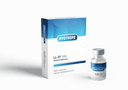
LL-37 (5mg vial)
arrow_forwardmyo-ll-37-5mg
Antimicrobial and anti-inflammatory combination — LL-37 provides broad-spectrum antimicrobial defence while KPV modulates excessive inflammatory responses, useful in infected wound models.
TB-500
arrow_forwardmyo-tb-500-10mg
Comprehensive tissue repair protocol — TB-500 accelerates cell migration and actin polymerisation; pairing with KPV reduces inflammatory interference in the healing cascade.
Cycling Note: Standard research protocols run 8–12 weeks. Allow a 4-week washout period before re-cycling.